We take on a running system — ours or someone else's. Good support is invisible: our team hears about an outage before your customers do, and improvements ship on a plan rather than in a panic.
Support isn't for when everything is already broken — it's for when downtime costs more than maintenance. One sign is enough:
Failures get fixed in panic mode, with no procedure
There are no agreed response and recovery times (SLA)
The in-house team is overloaded and can't close everything
You need improvements and development, not just bug fixes
The previous team left and nobody maintains the system
The system slows down as the database grows and needs upkeep

«Good support means our team hears about the problem first, not the users.»
Six areas of work. The exact scope is fixed in the contract, based on the system and how critical the processes are.
A single entry point for every request: logging, classification, prioritisation and routing.
Result
No request is lost in a thread — each has a status, a priority and a deadline.
Diagnosis and service recovery by procedure, followed by root-cause analysis.
Result
First the service runs again, then the cause is closed for good rather than until next time.
New features, interface changes and enhancements requested by the business, shipped in planned releases.
Result
The product keeps developing without turning every release into a risk to stability.
Availability, error and performance monitoring with alerts to the on-duty team.
Result
Our team is the first to know about a problem, not your users.
Work on database growth, performance, dependency updates and technical debt.
Result
The system doesn't degrade as data and load grow.
Audit of code, infrastructure and technical debt, documentation recovery and a stabilisation plan.
Result
A clear picture of the system's state and a plan: what to fix now, what can wait.
Three formats for different levels of criticality and workload. We recommend one after auditing the system.
For projects we built, right after launch.
Terms
When work comes up irregularly and a standing team makes no sense.
Terms
When the system is business-critical and under constant development.
Terms
Six stages from audit to routine work. By the time the first incident arrives, we already know how your system is built.
Code, infrastructure, technical debt and risks
SLA, priorities and escalation channels
Documentation, access, architecture walkthrough
Metrics, alerts and on-duty rotation
Closing the critical findings from the audit
Incidents, releases and reporting
Support quality should be visible in numbers rather than claims. These figures go into the monthly report.

Protector
Built an app to protect children in dangerous situations with live location sharing and fast help escalation
View case
Maria
Built and launched a mobile app to automate processes for the largest furniture factory in Russia and the CIS
View case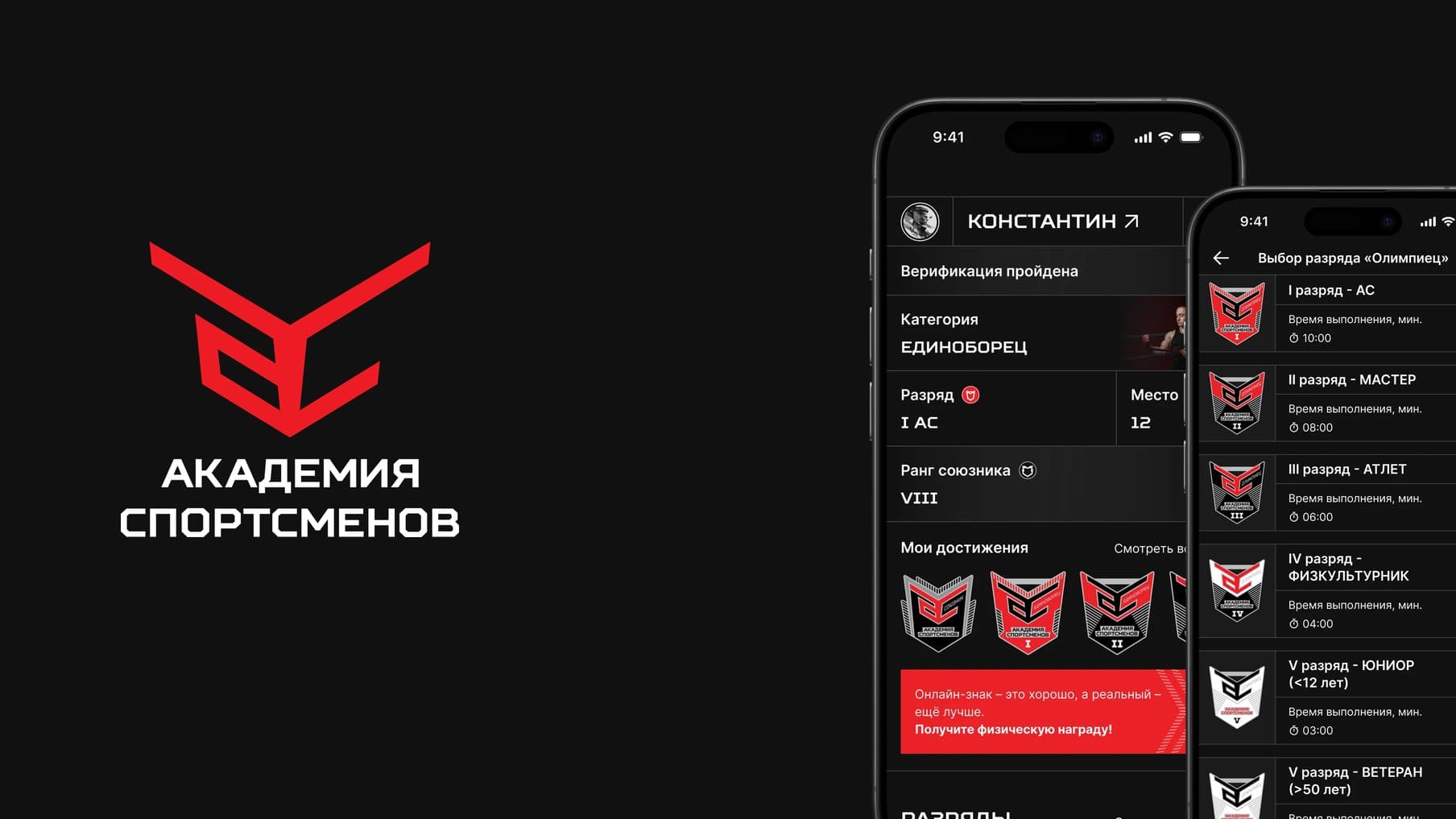
Athletes Academy
A mobile app and admin panel: athletes earn a sports rank on video and get the award by post
View caseYes, that's a large part of our work. We start with an audit: code, infrastructure and the scale of technical debt, plus recovering documentation where none exists. We then give you a stabilisation plan and say honestly what risks the current state carries.
It depends on the format: billed hours against a cap, or a fixed quarterly or annual retainer. Criticality, required response time and the volume of improvements all move the price. We give an exact figure after the audit — before that, any number would be invented.
An SLA is the agreed response and recovery time for each type of request. A critical outage blocking the business and a small interface annoyance get different priorities and different deadlines. The actual figures are fixed in the contract, based on how critical your processes are.
No. Improvements and development sit alongside incidents: new features, interface changes, optimisation. That's why we keep a shared backlog and plan releases rather than only reacting to breakage.
We hand over the code, documentation, access and the open backlog. We run projects so they can be handed over — without that, support turns into vendor lock-in.
Yes, and ideally before the first incident. An audit shows where the system is fragile as load and data grow, and lets us commit to a realistic SLA. Taking on a system whose internals we don't know would be unfair to you.
Tell us what the system is and what's happening with it now. We'll propose a format and the scope of an audit.