
COPP 64


«From the start of project discussions to the first release, our team worked for six months, conducting over 50 custdev sessions for in-depth analysis of the needs of each of the platform's 10 roles. This thorough approach allowed us to create a product that met all client expectations and exceeded them. We are proud that we were able to bring such a complex project to life and are confident that our work brought real value to users.»
Kirill Kaplin
SEO PROFSOFT
Developing a digital educational platform is a complex process requiring a clear strategy, flexibility, and speed. The PROFSOFT team accomplished this task in less than a year, with the first release ready in just 6 months. After an active phase of testing and refinement, the final version of the platform was released in March 2021.
- Application architecture
- UX/UI design
- Personal accounts
- Organized processes
DPO Competency and Educational Program Constructor
The service is designed for creating digital educational materials and assessment tools.
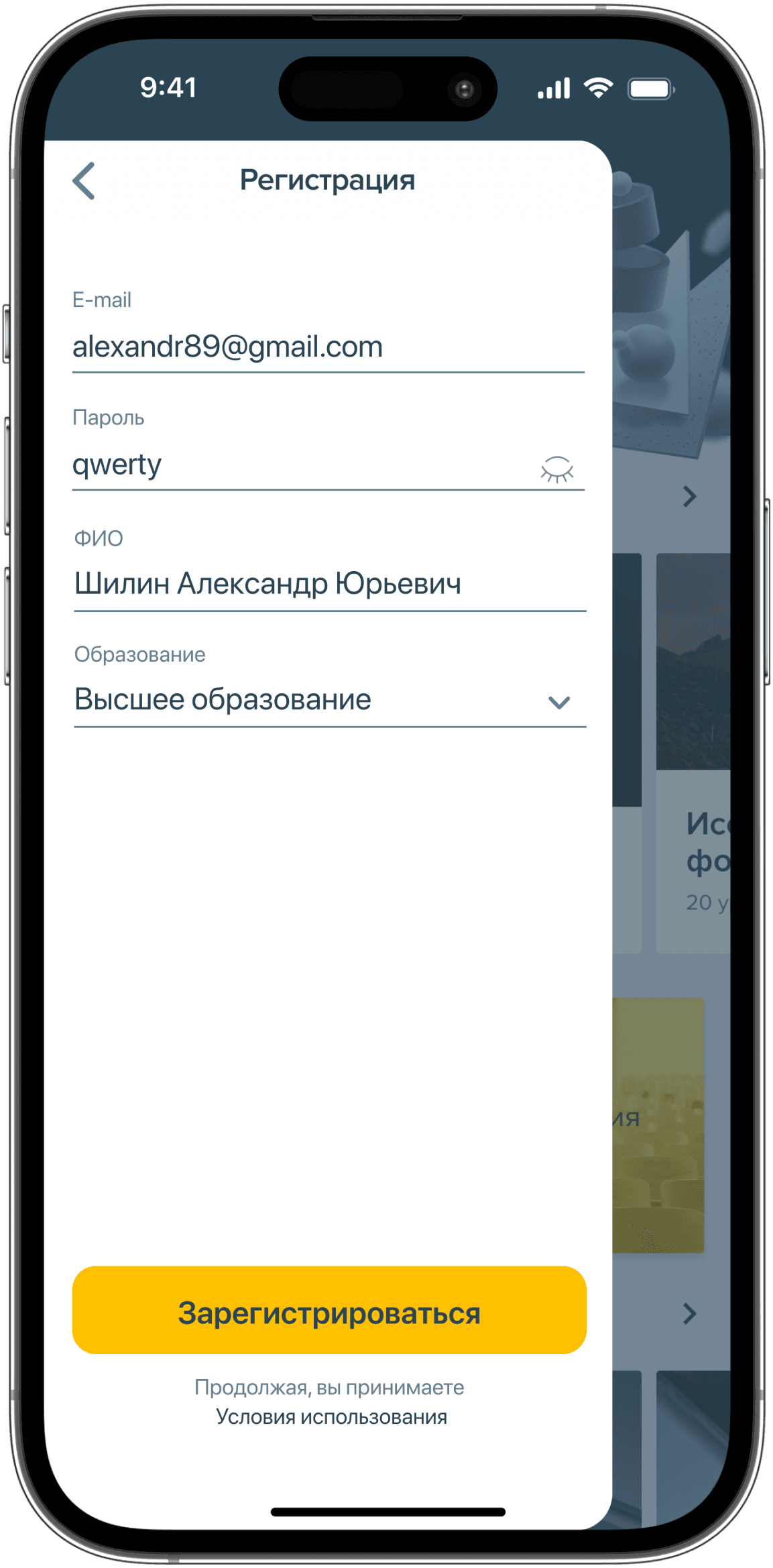

It features functionality for developing lectures, courses, practical assignments, methodological guides, and tests. All created materials undergo expert review for compliance with federal educational standards and mandatory peer review. Additionally, a digital educational resource library is available with filtering by competencies and educational programs.

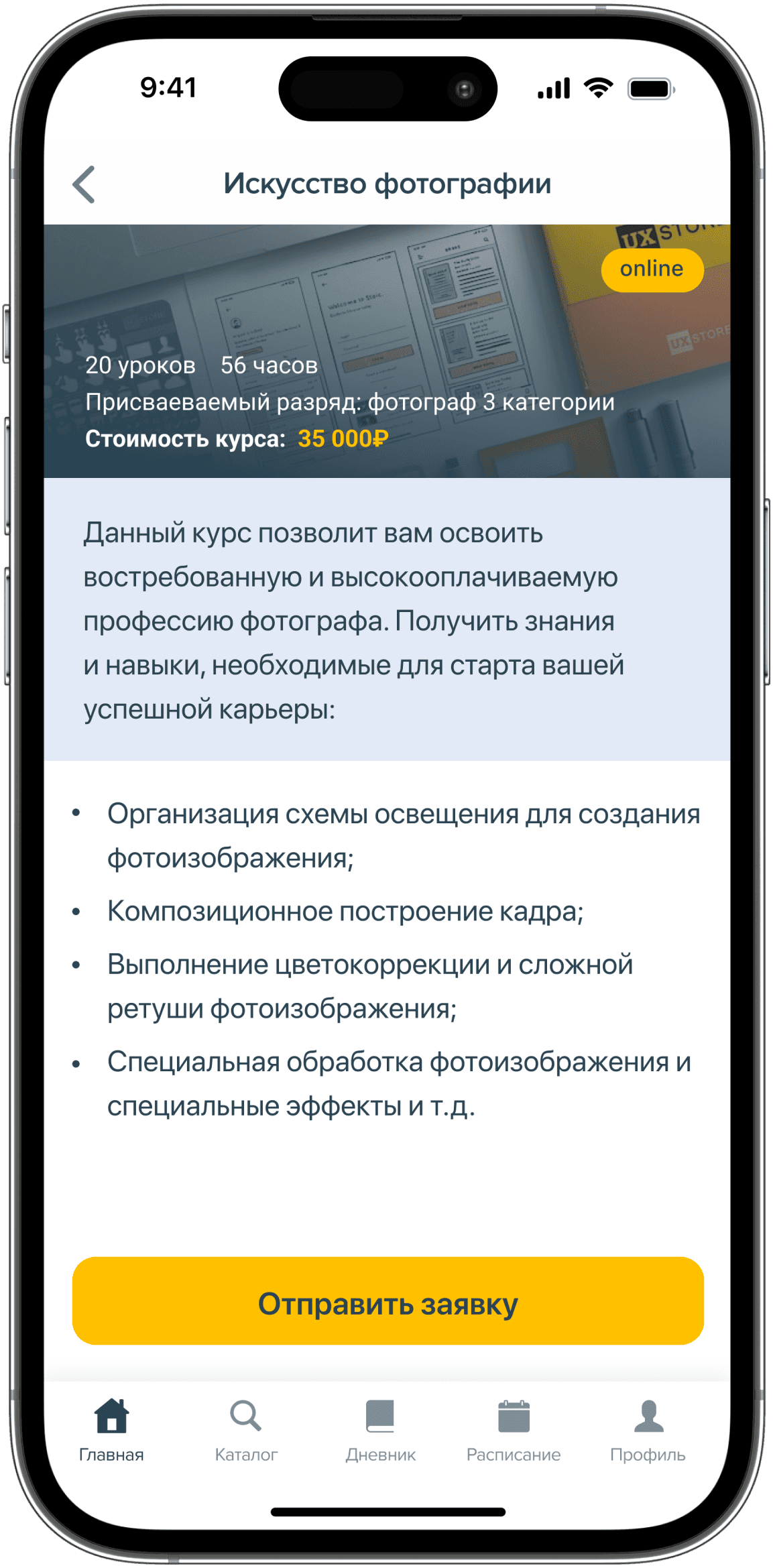
Educational Process Management Services
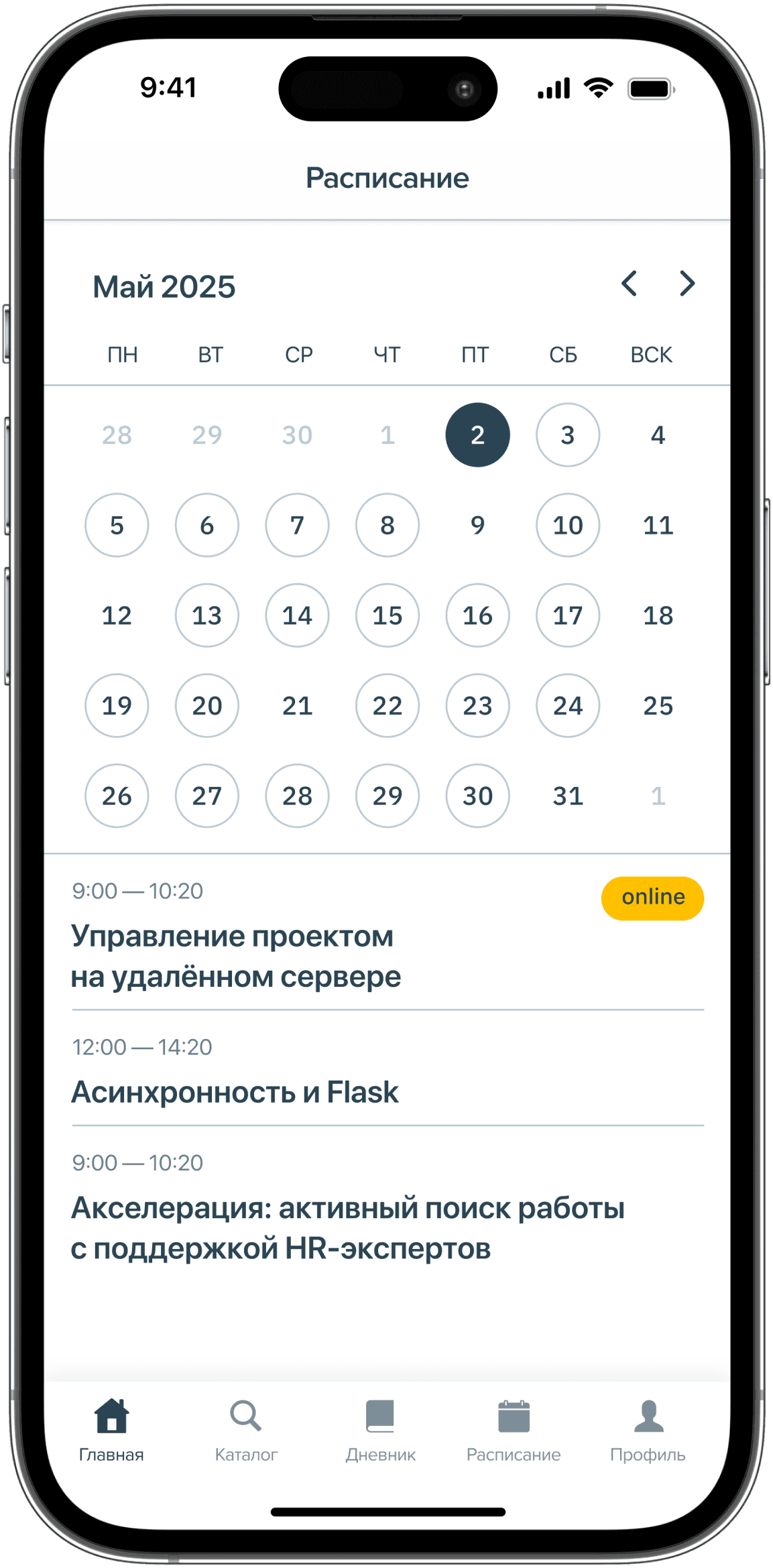
The 'Schedule' service has the following capabilities:
- Schedule of the Center for Advanced Professional Training (COPP) as a whole, individual organizations (within COPP), a specific teacher, or a specific student;
- Personal schedule creation;
- Access to complete class information including teacher, location, and time details.
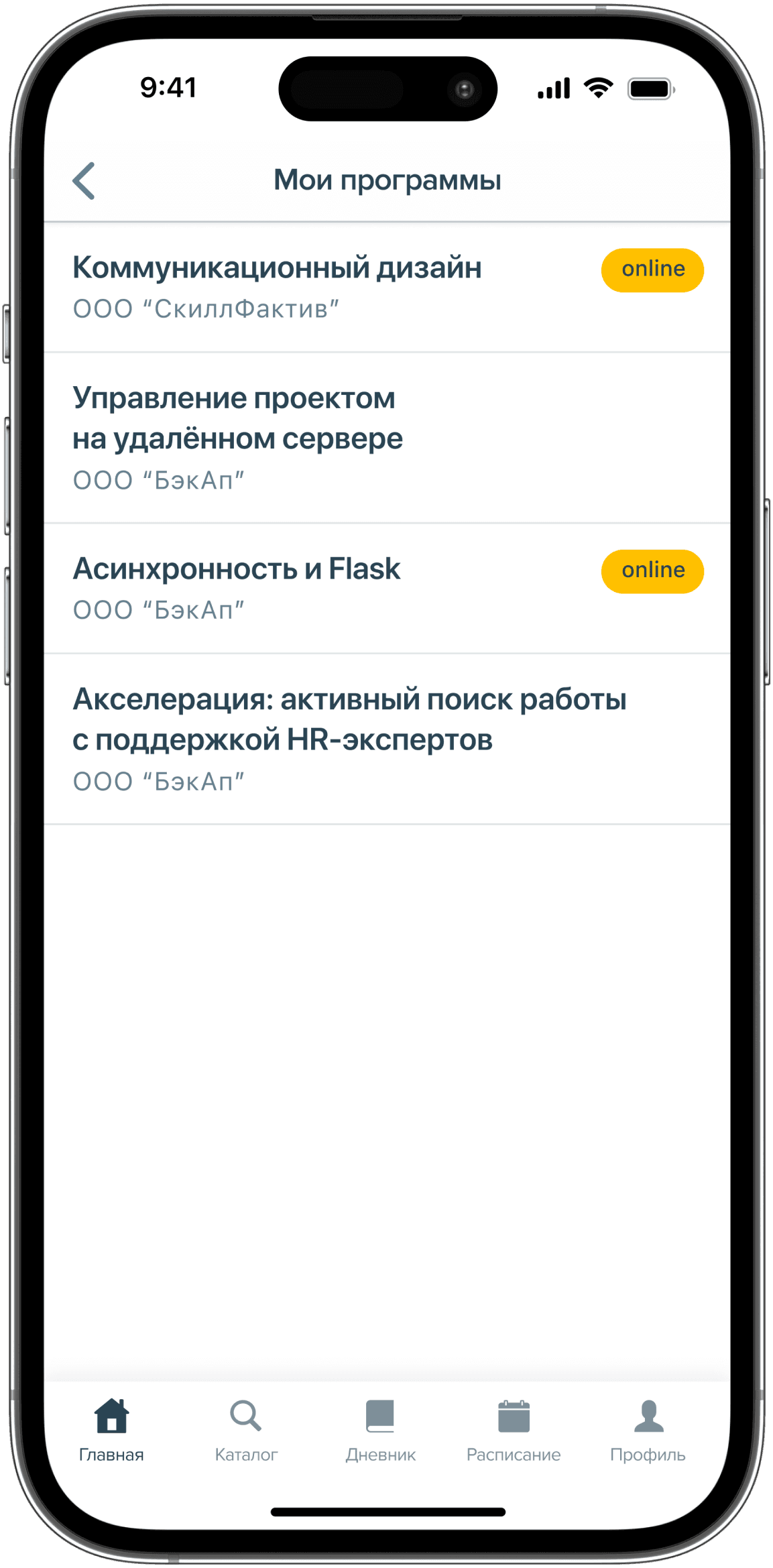
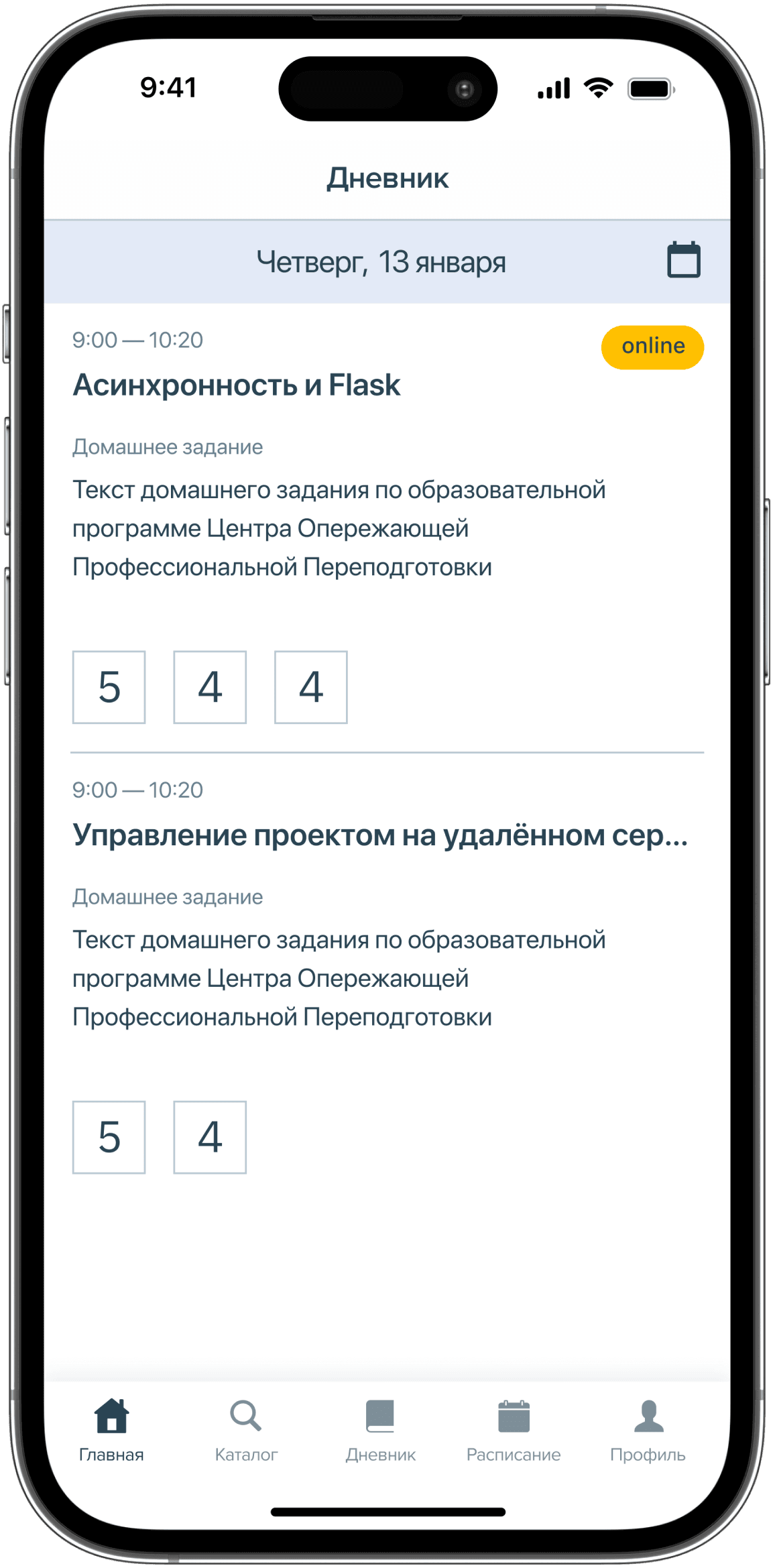
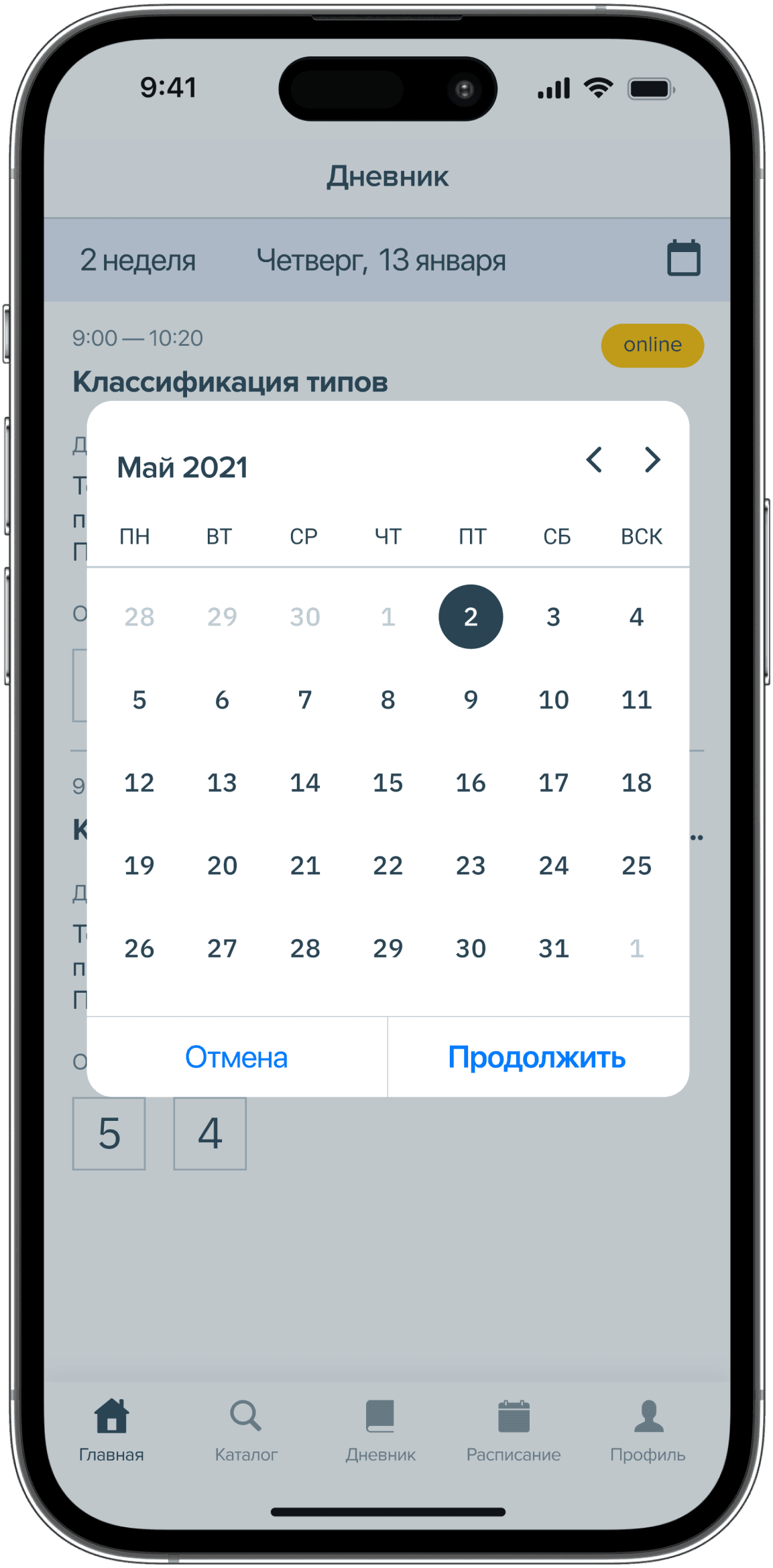
The 'Digital Diary' service includes:
- Day-by-day class information
- Grade assignment capability
- Student performance data storage system
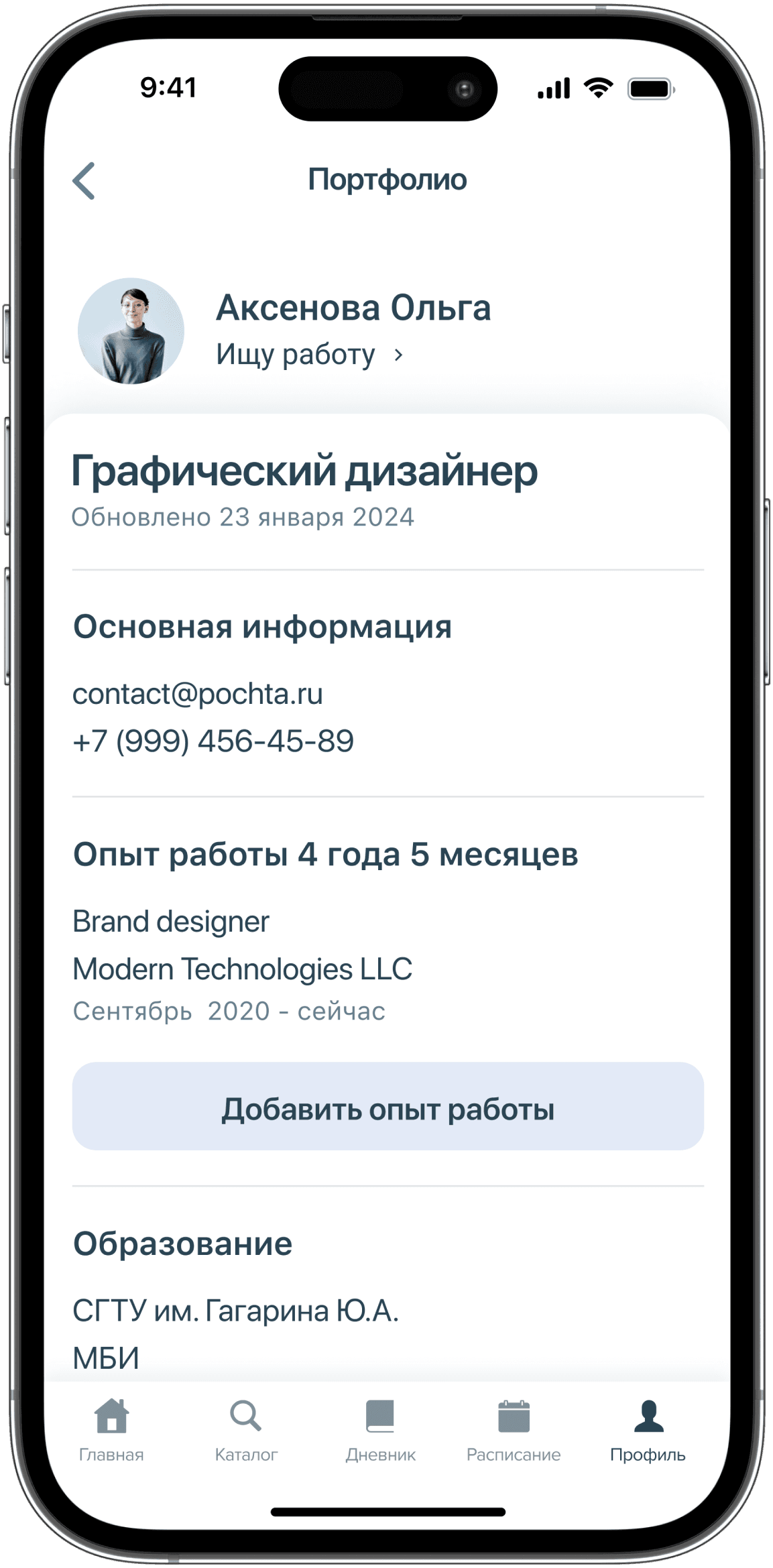
The 'Digital Portfolio' service accumulates and provides access to:
- Academic and research activity results
- Educational program completion results
- Qualification information

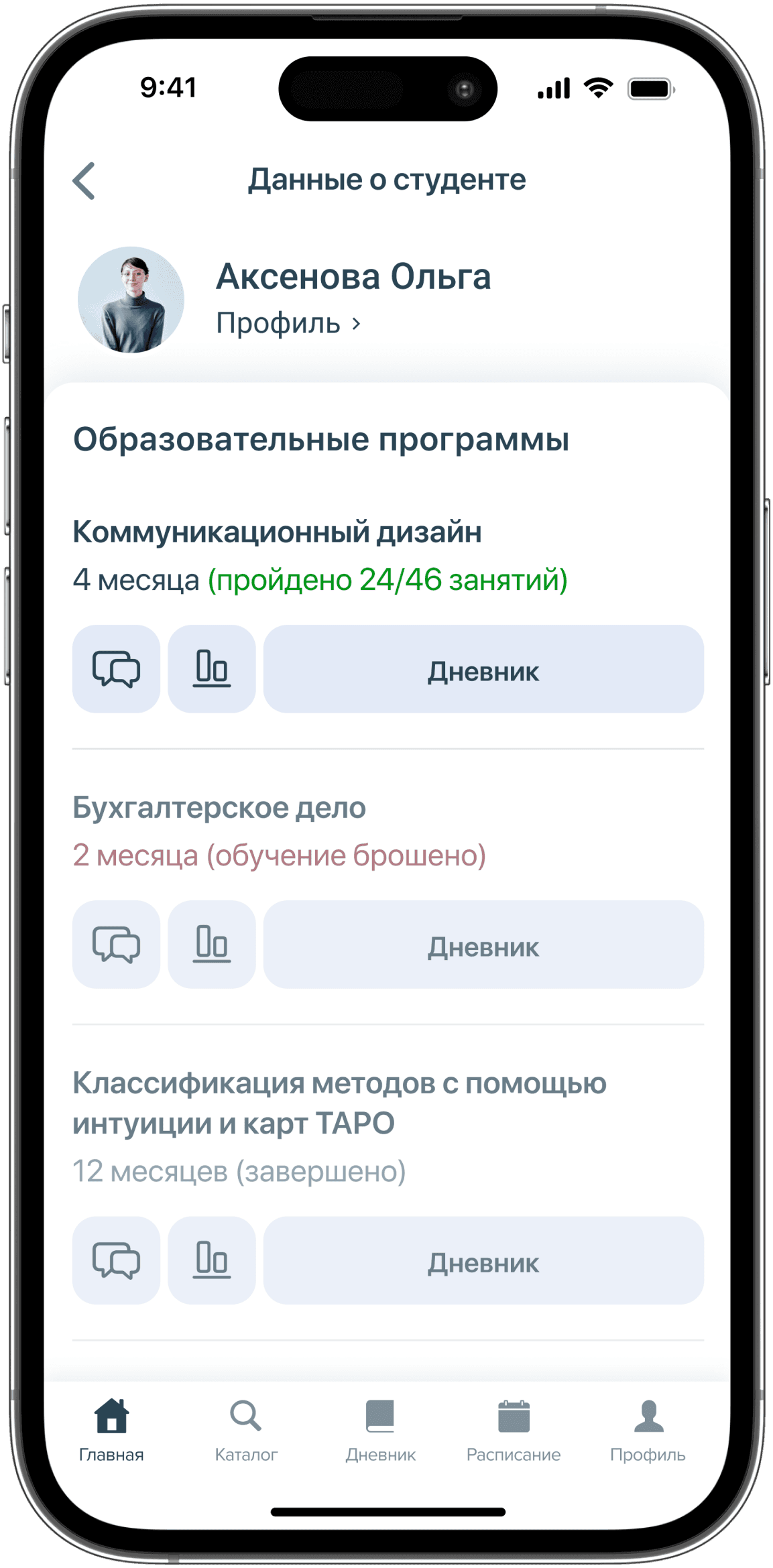
The 'Enrollment Management' service provides the following capabilities:
- Accepting and rejecting enrollment applications;
- Forming study groups;
- Maintaining a student registry;
- Access to statistical data on each student's training.
The 'Data Exchange' service allows creating group chats and sending individual messages.
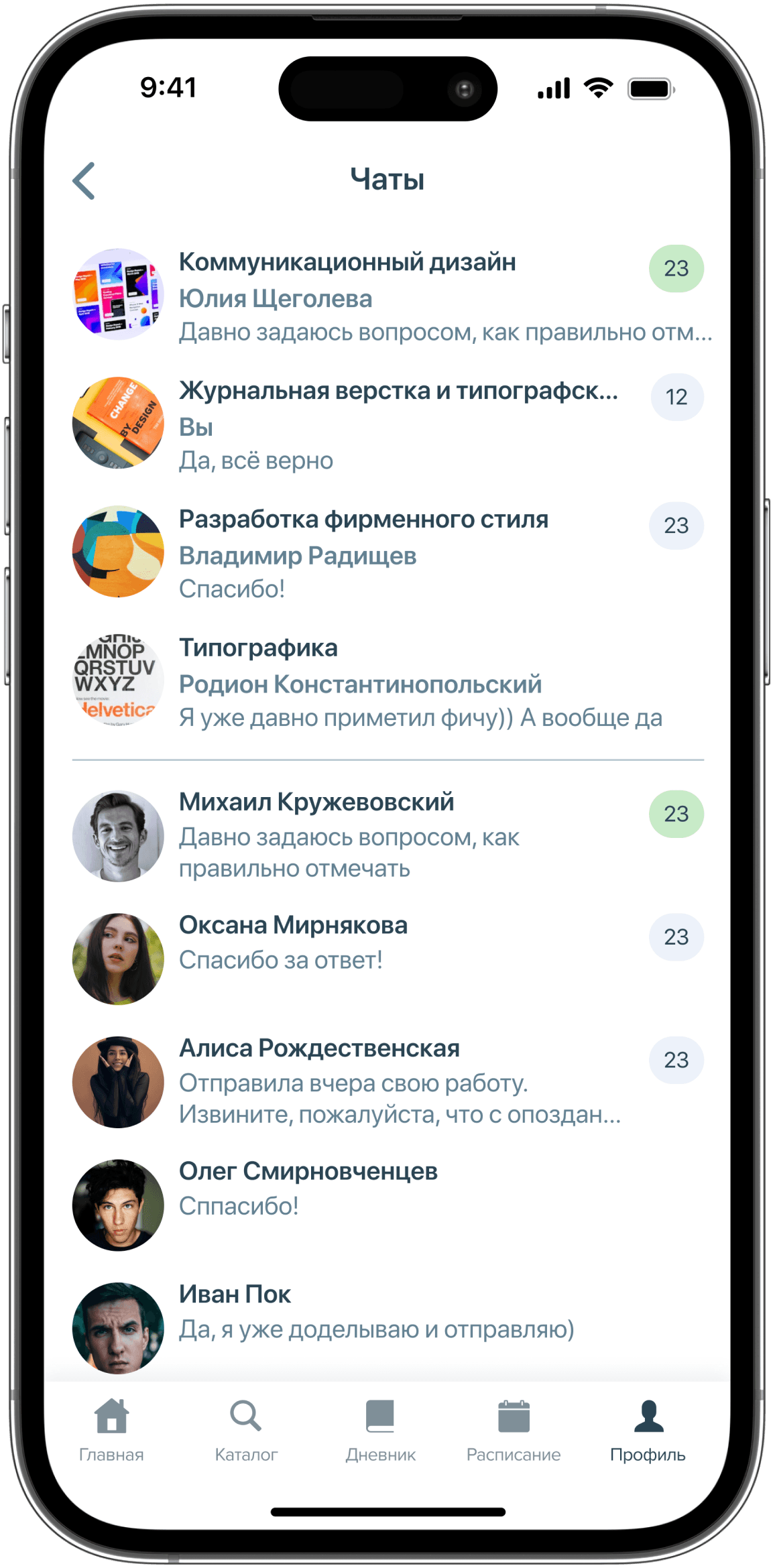
Platform Administration and Graduate Employment Services
Schedule viewing in personal account. Course selection with enrollment. Training and professional development. It was important for the client to not only ensure quality education but also facilitate further employment of graduates. In this regard, we created the following services:
At the time of release launch, COPP included 27 regional educational institutions.
It was necessary to develop a role system where each role would be responsible for a specific block of functionality, yet all roles had to work synergistically to ensure quality education and subsequent graduate employment. In a large-scale project, it is critically important to monitor all participants' work, so specialized services were implemented for platform administrators:
Additionally, an accessible version of the platform was developed for visually impaired users.
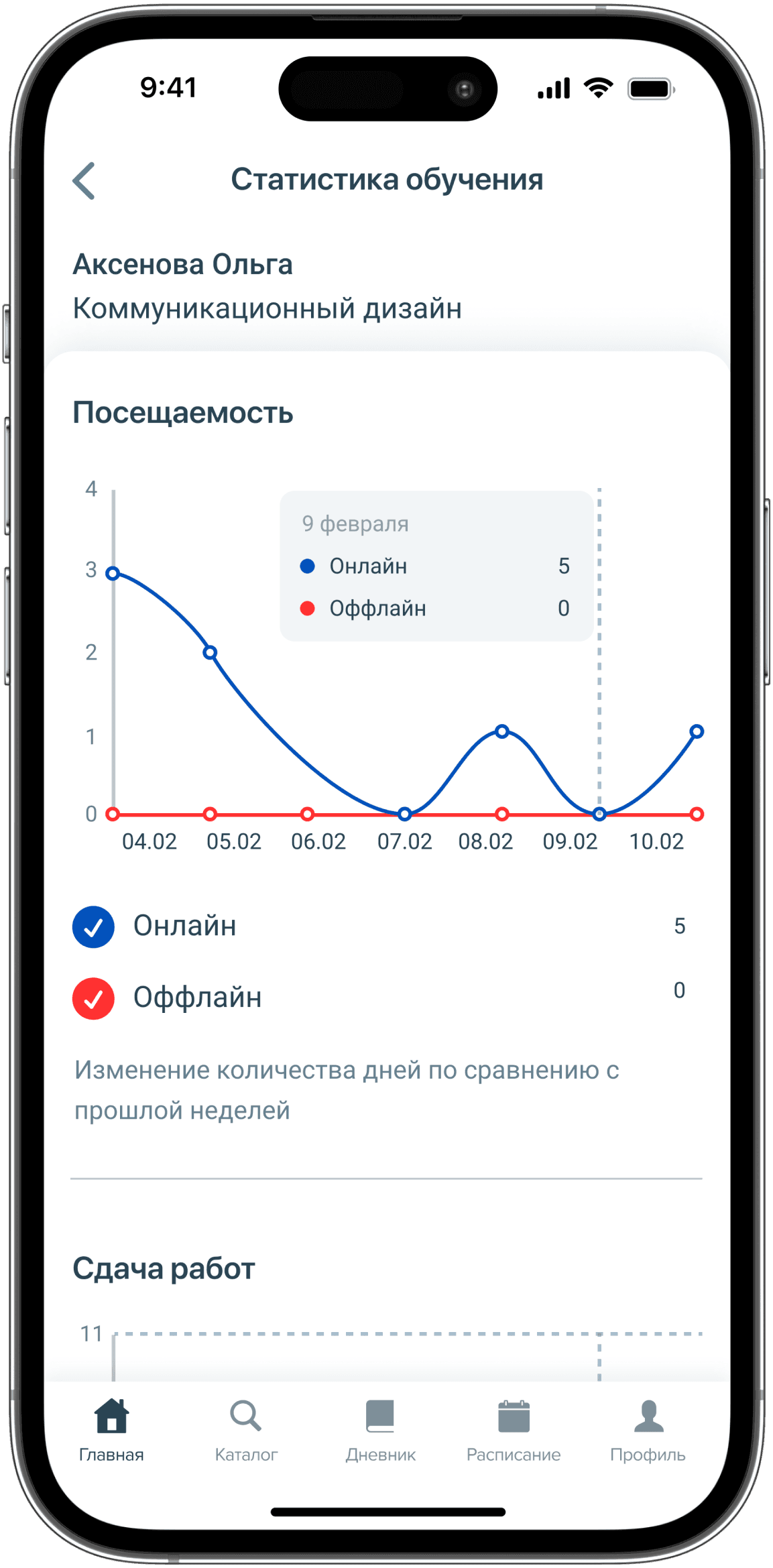
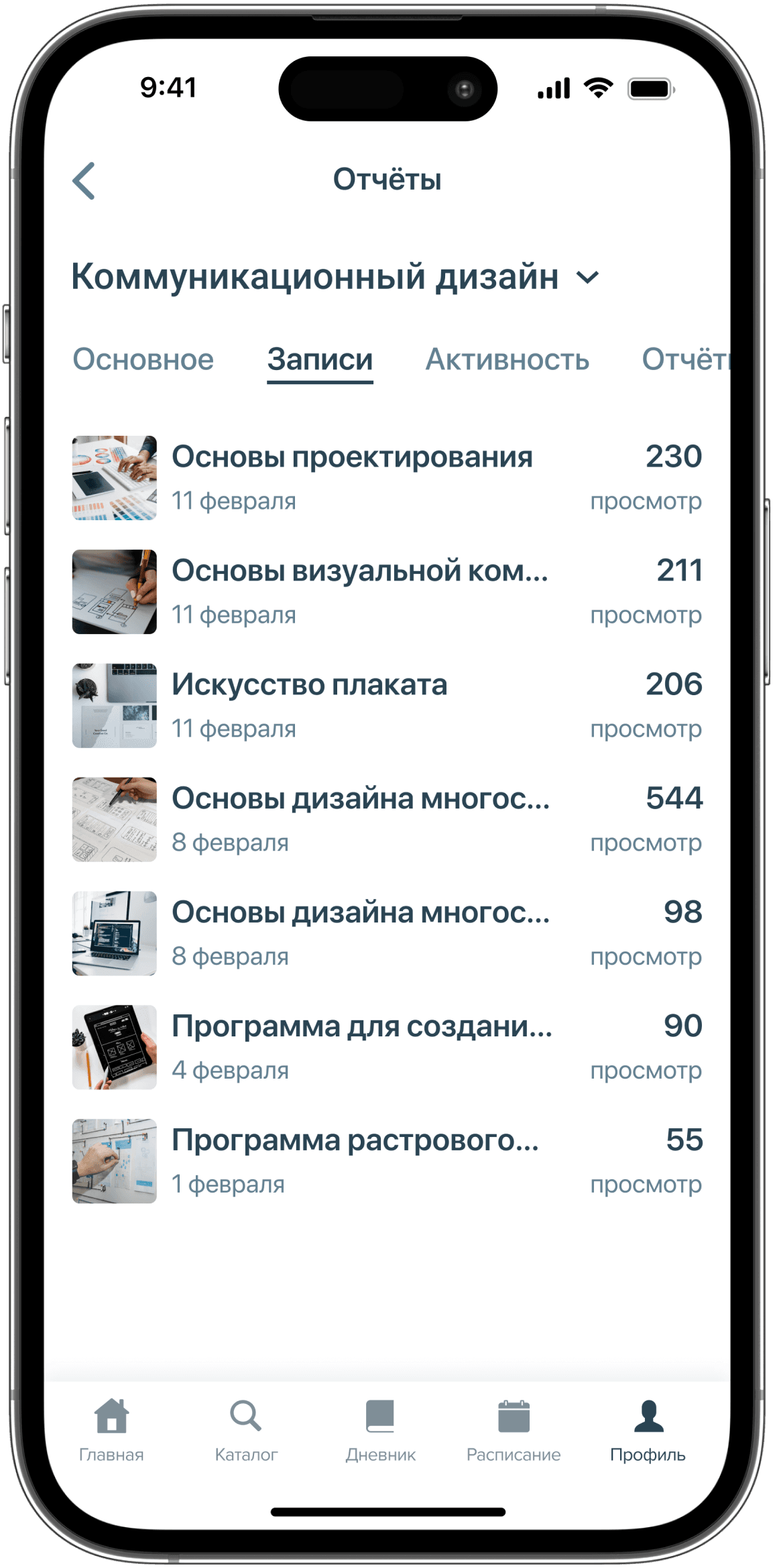
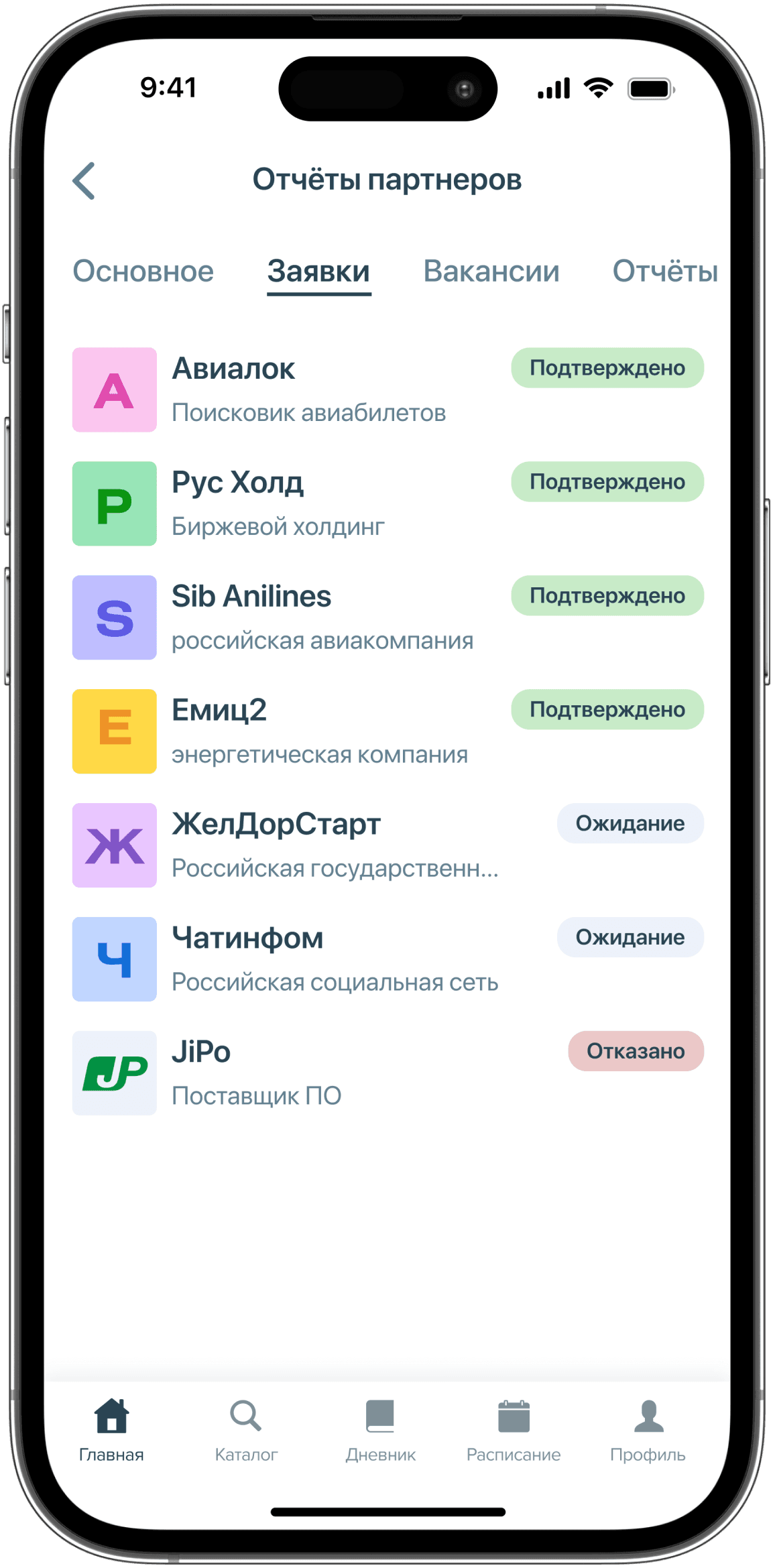
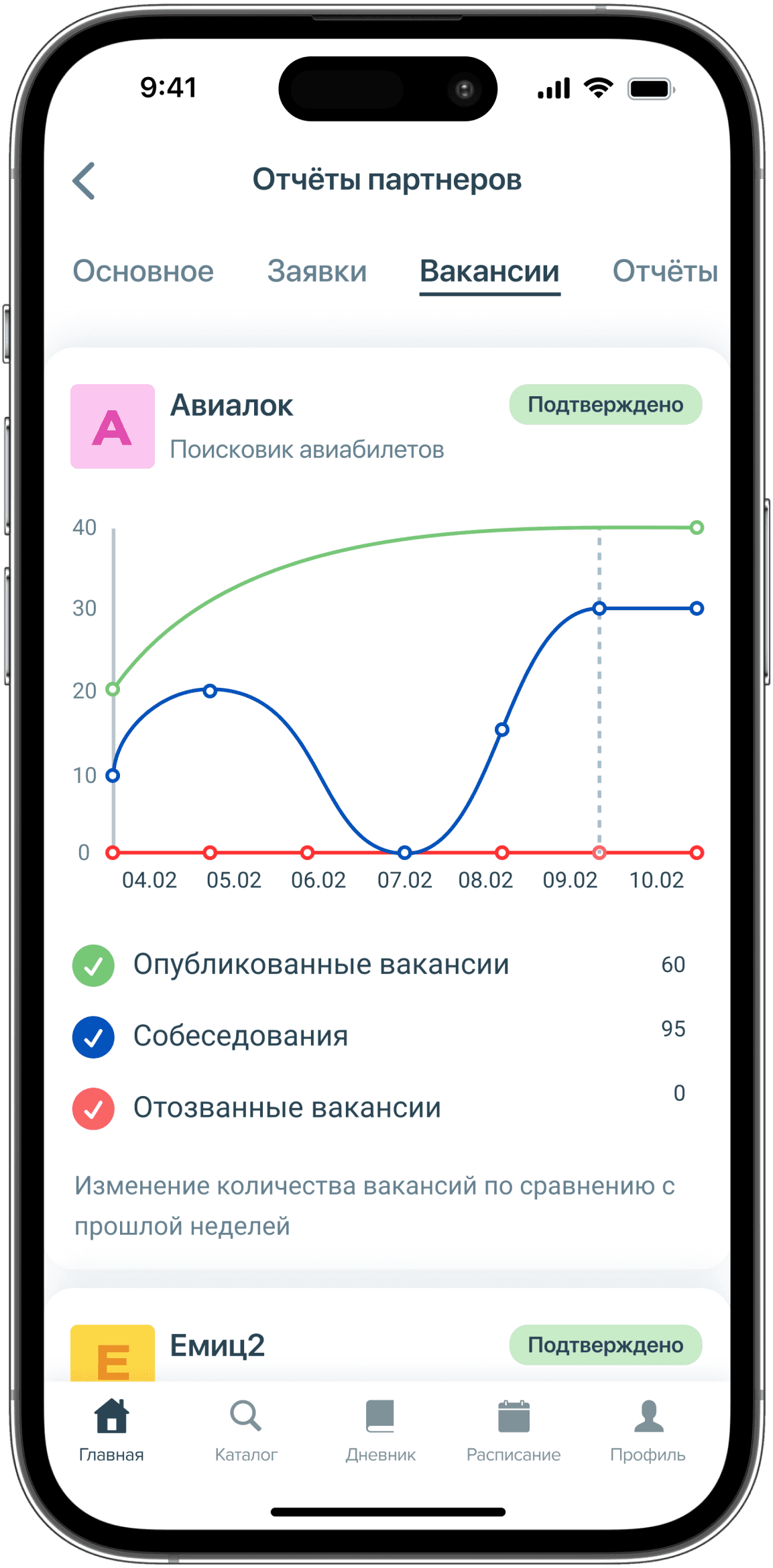
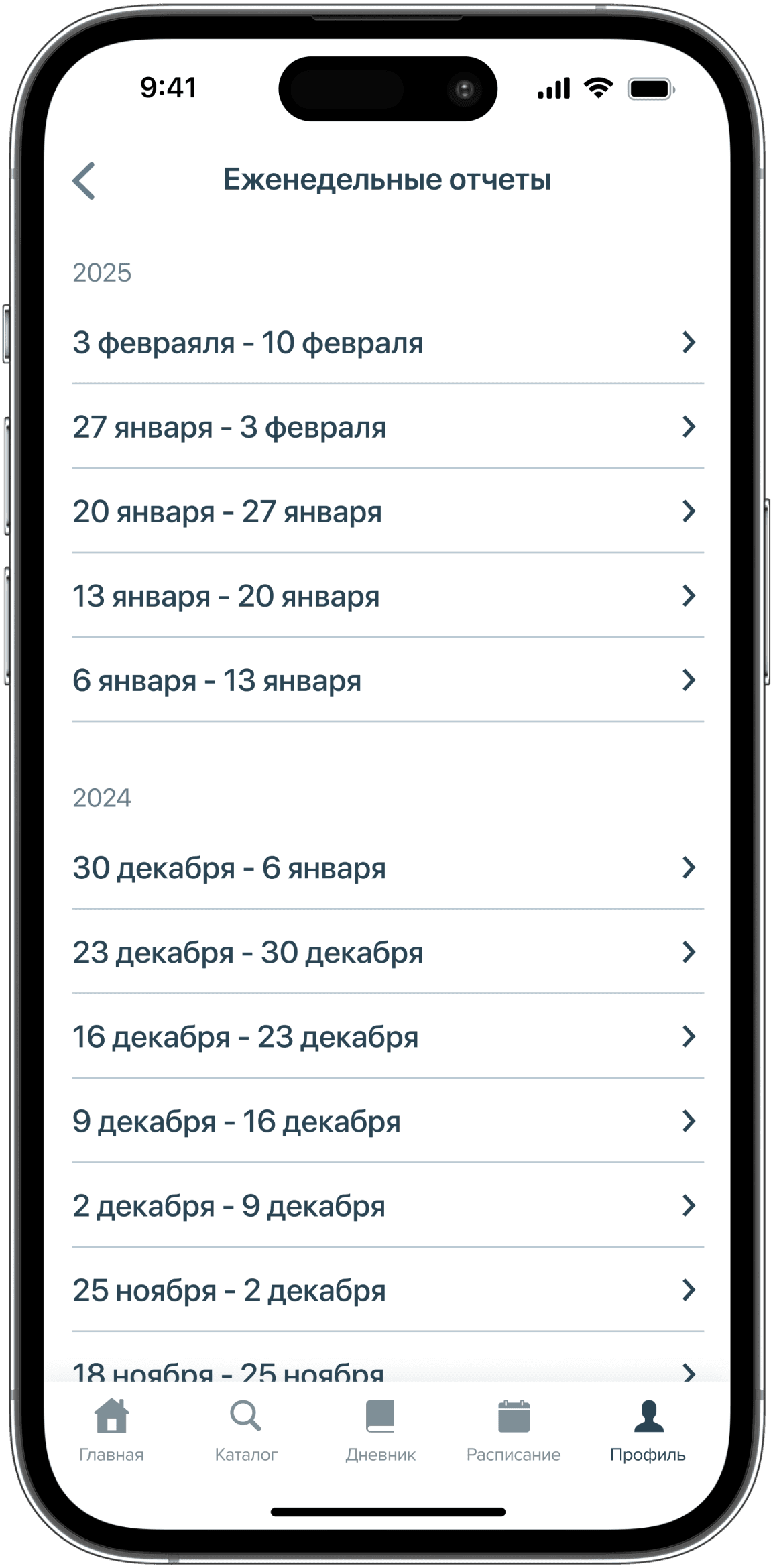
Before starting development, we deeply immersed ourselves in user needs. Creating a digital educational platform means not just writing code, but considering the interests of all process participants: from students to employers. How did we do it?
- Conducted interviews with key stakeholders — teachers, administrators, students, HR specialists.
- Analyzed existing systems and their weaknesses.
- Developed 50 case studies, thoroughly working through each user role on the platform.
A month and a half of intensive analytics allowed us to create a system that doesn't just automate education, but makes it convenient, accessible, and oriented toward real market demands.
Creating just a beautiful interface isn't enough. We developed the design from scratch, based on the client's brand book and focusing on user convenience. The educational environment is complex, and the platform is used by students, teachers, and employers. We needed to combine intuitiveness, logic, and functionality. How did we solve this challenge?
- Considered modern UX/UI standards.
- Developed a clear interface without complex instructions.
- Adapted the design for different user categories.
Any complex IT project faces challenges. In our case, these were external service integration and performance optimization. What tasks did we face and how did we solve them?
- Synchronization with external systems without data loss: implemented modern technologies for seamless integration.
- High load and need for fast platform operation: optimized code, increasing system speed.
- Ensured stable operation under peak loads with proper architecture.
For the platform to truly streamline educational processes, it needed to 'befriend' external systems. How did we solve this task?
- Integrated CRM and educational institution databases.
- Automated key processes, reducing manual work.
- Ensured seamless data exchange between all system components.
As a result, all participants — from students to administrators — work in a unified digital space where data is updated automatically and processes have become faster and more convenient.
When students, teachers, administrators, and employers work on one platform, it's important that each sees only what they need. How did we implement this?
- Developed a flexible role system — each user has their own access level.
- Protected data from unauthorized access.
- Made the platform convenient: no extra functions, only necessary tools.
To create a fast, scalable, and convenient platform, we chose an optimal technology stack that ensures stable operation and high performance. What technologies were used?
- Backend: PHP + Symfony — a powerful foundation for high speed and reliability.
- Frontend: React — for fast rendering and convenient interface.
- Admin panel: Twig — ease of use and customization flexibility.
- Mobile apps: Swift (iOS) and Kotlin (Android) — native solutions for maximum performance.
For the platform to work quickly, easily adapt to changes, and withstand high loads, we built a microservice architecture. What does this provide?
- Flexibility — individual modules can be updated and refined without affecting the entire system.
- High performance — load is distributed evenly, making the platform resilient.
- Easy scaling — adding new features doesn't require global changes.
Testing was conducted at several stages of development:
- Unit testing — caught errors at the code level.
- Integration testing — ensured all modules work together without issues.
- User testing — verified the convenience and logic of platform interaction.